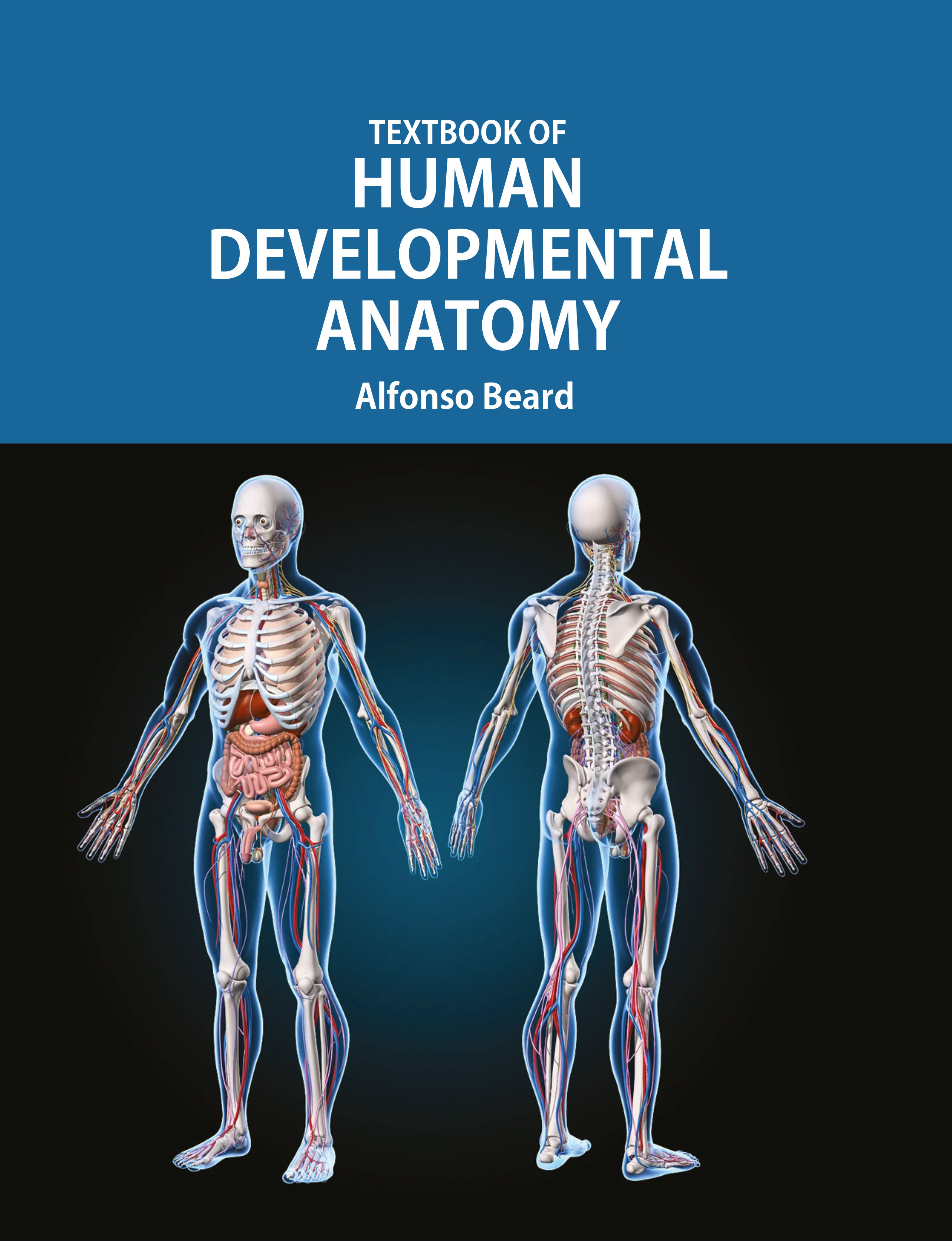
Textbook of Human Developmental Anatomy
Enquire nowAbout this book
This academic resource offers a detailed and systematic exploration of human development from the earliest stages of embryogenesis through the formation of essential organ systems. It begins with an introduction to the principles, history, and significance of developmental anatomy, establishing a strong conceptual foundation for students and professionals. The second chapter addresses gametogenesis and fertilization, providing insight into how male and female gametes are formed and how their union initiates embryonic life. As the journey continues, the book explores early embryonic development, highlighting critical stages such as cleavage, blastocyst formation, and implantation. Gastrulation and the derivation of the three primary germ layers—ectoderm, mesoderm, and endoderm—are presented as pivotal events that set the stage for organ formation. The subsequent chapter on neurulation discusses the development of the central and peripheral nervous systems, emphasizing neural tube formation and differentiation. A comprehensive section is devoted to the cardiovascular system, outlining the transformation of the primitive heart tube and the formation of major blood vessels. The final chapter focuses on the gastrointestinal system, detailing the formation of the primitive gut and its division into foregut, midgut, and hindgut, as well as associated organ development. Throughout, the content integrates molecular, genetic, and morphological aspects of development, reinforcing key concepts with clear illustrations and clinical correlations. Designed to support learners in medicine, anatomy, and biology, this resource is both a foundational guide and a valuable reference for understanding the complexities of human prenatal growth and congenital anomalies.