Pharmaceutical Analysis
Enquire nowAbout this book
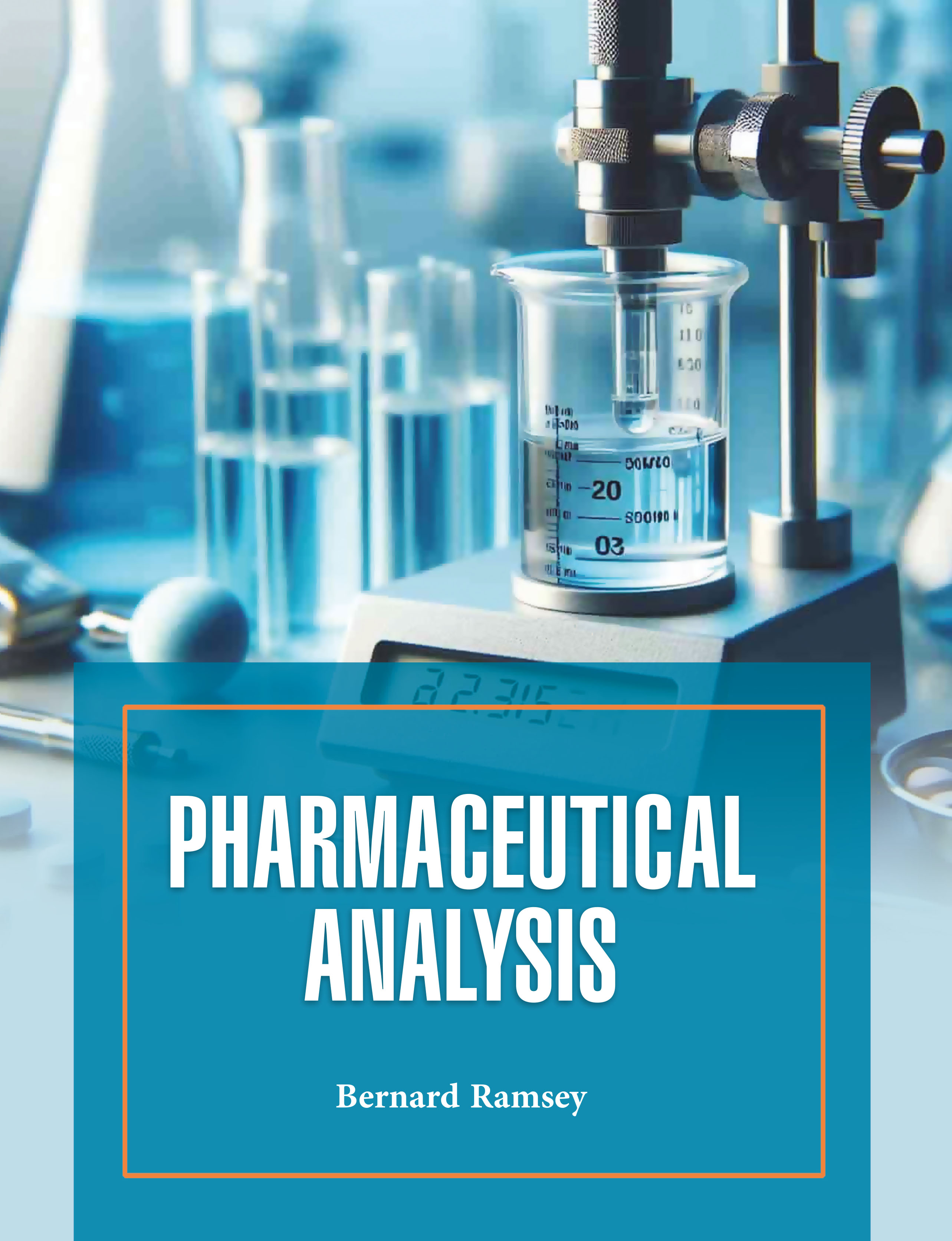
This book provides a comprehensive exploration of pharmaceutical analysis, designed to support both foundational understanding and advanced study in the field. It opens with a clear overview of the principles and scope of pharmaceutical analysis, establishing its role in ensuring the identity, purity, safety, and efficacy of pharmaceutical products. The subsequent chapters guide the reader through a wide spectrum of analytical techniques, highlighting both classical and modern methodologies that are central to pharmaceutical quality control and research. Beginning with sampling and sample preparation, the content emphasizes the critical importance of accurate and representative sampling in obtaining reliable analytical results. The book then delves into titrimetric and gravimetric methods—traditional techniques that continue to hold value in pharmaceutical laboratories for their simplicity and precision. Instrumental techniques are explored in detail, with dedicated chapters on UV-Visible spectrophotometry and molecular vibrational spectroscopy, including both infrared and Raman approaches. These chapters illustrate how light absorption and scattering phenomena can reveal valuable information about chemical structure and concentration. Chromatographic methods are presented in two focused chapters, covering thin layer chromatography (TLC), gas chromatography (GC), and high-performance liquid chromatography (HPLC), reflecting their central role in separating and quantifying pharmaceutical compounds. The text explains the theory, instrumentation, and applications of each technique in practical pharmaceutical contexts. The final chapter extends into electrophoretic and electrochemical methods, showcasing their growing relevance in analyzing charged species and electroactive drugs. By combining theoretical insights with practical relevance, the book equips students, educators, and professionals with the tools needed for precise and reliable pharmaceutical analysis. Each chapter builds systematically, ensuring clarity for beginners while offering depth for more experienced readers, making this a vital resource for education, research, and quality assurance in pharmaceutical sciences.